

Herbstmarathon
Threshold training: How to pace tempo runs properly
- Published
- Reading time
- 5 min
- Author
- Athlix Performance
Seven weeks until Lausanne. Your legs are willing, your mileage is high—and yet every pace feels the same.
It’s the most common state in late summer: You run a lot, you run regularly, but you run everything at the same comfortable pace. The easy run is too fast, the hard run too slow. That gray area is where most training time goes to waste. The tool that gets you out of it is threshold training—and it only works when you dose it properly.

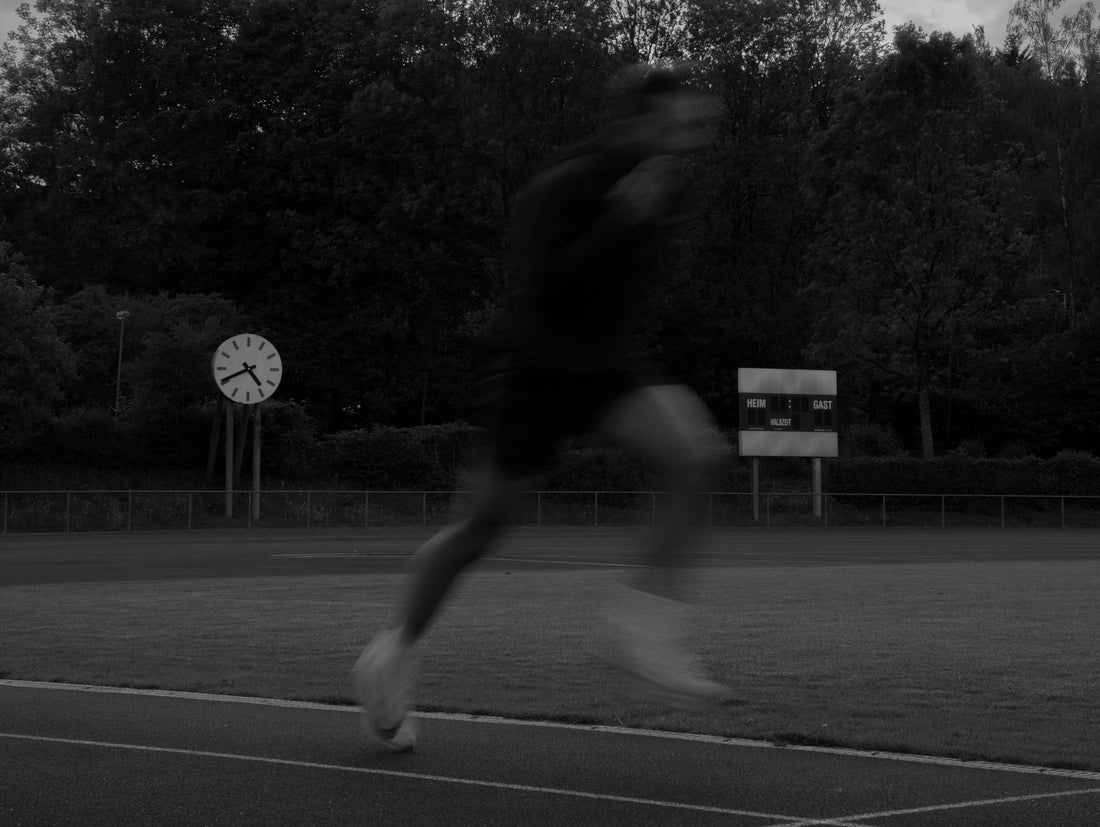
Every tempo run starts with an honest warm-up—here before the session at the Athlix Running Club.
What the Threshold Really Is
Your body always produces lactate, even while you sleep. What matters is not production but balance: Up to a certain intensity, you can break down as much lactate as you produce. Beyond that point, the system tips, concentration rises, and the clock starts working against you. This tipping point is the lactate threshold—according to Runner's World, often around 4 mmol/l of blood lactate, practically at about 85 to 90 percent of your maximum heart rate and roughly at the level of your current 10-kilometer race pace.
Why training right there delivers so much is shown by a narrative review in the Montenegrin Journal of Sports Science and Medicine (Subbarayalu et al., 2024): Runs at and slightly above threshold improve lactate utilization, enhance mitochondrial function, and shift the point at which fatigue takes over. In practical terms: After a few weeks, the same pace costs you less. Not because you are tougher, but because your physiology works more efficiently.
The Three Intensities—and Where the Threshold Fits
If you mix everything together, you train nothing properly. Here’s how to classify your sessions.
Zone 1 – Base
Easy, below the first threshold
You can speak in full sentences. Around 80 percent of your weekly mileage belongs here—and yes, it feels slow.
Zone 2 – Threshold
85–90% HRmax, approx. 10K race pace
Controlled hard. Short answers are possible, but conversation is not. This is where the tempo run belongs—and where most pacing mistakes happen.
Zone 3 – Intervals
Clearly above threshold
Short, hard efforts lasting from 30 seconds to 5 minutes. Use them sparingly—but don’t leave them out entirely.
20–40
Minutes at threshold per session
1–2×
Per week for recreational runners
15
Minutes of easy warm-up, minimum
Reference values based on Runner's World (threshold training) and Subbarayalu et al., Montenegrin Journal of Sports Science and Medicine, 2024.
How to Build the Tempo Run Into Your Week
The theory is quickly explained; execution is what matters. Four points make the difference:
- Take the warm-up seriously: At least 15 minutes easy, plus three to four strides. If you start the tempo section cold, you will run the first few minutes too fast and the rest too slowly.
- Continuous effort or cruise intervals: Either run at threshold continuously for 20 to 40 minutes—or, if that feels mentally too long, do 3× 10 minutes with 2 minutes of easy jogging between intervals. The cruise format gives you the same time in the zone but feels significantly more manageable.
- Use your breathing, not your ego: The talk test is more precise than any watch on a cool autumn morning. Three to four words at a time—that’s enough. If you can say more, you are too slow. If you can say less, you are too fast.
- Plan a buffer day: Every threshold session should be followed by a very easy run or a rest day. Two hard days in a row turn a training stimulus into a problem.

The hardest decision in threshold training comes before the first kilometer: hold your pace instead of chasing it.
The Mistake Almost Everyone Makes
Threshold training works—but it is a tool, not a permanent state. That is exactly where the trap lies: Because tempo runs feel productive, more and more sessions drift into this moderate intensity. And then nothing happens anymore.
How significant this effect is shown by a frequently cited study by Thomas Stöggl and Billy Sperlich in Frontiers in Physiology (2014). Over nine weeks, the researchers compared four training models in well-trained endurance athletes. The polarized training group—lots of easy running, a little hard running, and little in between—increased its maximum oxygen uptake by 11.7 percent and its time to exhaustion by 17.4 percent. The group that focused primarily on threshold training did not significantly improve its oxygen uptake and increased its time to exhaustion by 6.2 percent.
The lesson is not “tempo runs do nothing.” It is this: One or two targeted threshold sessions per week, embedded in plenty of truly easy running, beat five moderate-pace runs. The hard work in autumn is staying slow enough on the other days.
Seven Weeks Until Race Day
If you want to test what you have learned under race conditions: The Lausanne Marathon on October 25, 2026, includes a marathon, half marathon, and 10-kilometer race—the 10K is the most honest test of your threshold because you race almost exactly in this range. That leaves around seven weeks: enough time for five or six well-executed threshold sessions plus a taper.
For the sessions themselves, the less you notice your gear, the better. The Tempo Run – Essentials Socks stay in place without creasing in your shoes thanks to their ribbed construction, which makes more difference over 40 minutes at a steady pace than you might think. And because mornings are getting cooler without being cold yet: The Driven Pace – Performance Shorts are light enough for the tempo section and dry quickly enough to keep your cool-down from leaving you chilled.
Conclusion
The threshold is not a myth or an app-generated number, but the point at which your body is just managing to keep up. Train it deliberately and you shift it. Train it constantly and you shift nothing. One or two tempo runs per week, with a proper warm-up, paced honestly by your breathing, followed by an easy day—that is enough for the entire autumn. The rest is patience on the slow days.
Try it out and tag us on Instagram at @athlix.performance—we look forward to seeing how you put your threshold sessions into practice and will share the best posts with the community.