

Marathon
The First 48 Hours After the Race – How to Recover Properly
- Published
- Reading time
- 4 min
- Author
- Marvin Ziegler
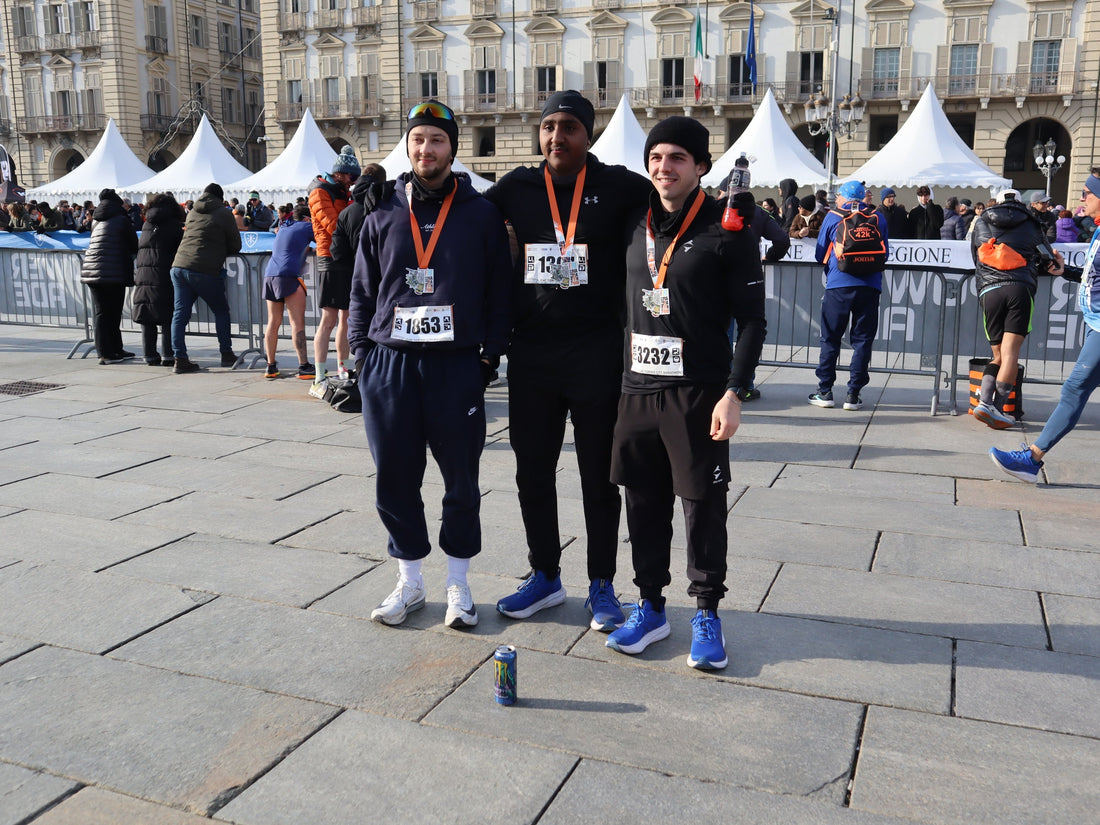
The clock has stopped and the mood is high—but your body is far from finished. This is where many people make the mistake of treating the finish as the endpoint. In reality, it’s only the end of the exertion and the start of your recovery.
What you do in the first 48 hours after a race often matters more for your next few weeks of training than the race itself. Getting your legs back quickly, keeping a clear head, and trusting that your body is ready again—none of this happens by itself. It’s the sum of small, smart decisions between the finish line and your first easy run afterward.

Protein plus carbohydrates during the recovery window—simple, but effective.
Why the first 48 hours are so important
A race places massive stress on your body: muscle fibers sustain microscopic damage, glycogen stores are depleted, inflammation markers rise, and fluid and electrolyte levels shift. According to Hospital for Special Surgery (HSS), the muscular response after a marathon often doesn’t peak until around 48 hours later. In other words: just because you felt euphoric at the finish doesn’t mean your body is ready again.
That’s exactly why recovery during this window isn’t a luxury—it’s active performance work. Handle it properly, and you’ll get back to training faster. Skip it, and you’ll often pay for it with two tough weeks.
Your post-race recovery timeline
From the finish line to your return to training – phase by phase
0 – 15 minutes
Cooldown & Arrival
Keep walking easily for 5–10 minutes. Bring your heart rate down, change out of sweaty clothes, and drink calmly.
15 min – 2 hours
Fueling & Rehydration
Carbohydrates plus protein during the recovery window. Replenish fluids and electrolytes.
Evening
Sleep & Wind-Down
Sleep is the biggest recovery lever. No pressure, no unnecessary input.
Day 1 afterward
Active recovery
20–30 min. walk, gentle mobility. No recovery run that secretly turns fast.
Day 2 afterward
Honest check-in
Assess your legs, gait, and energy honestly. Fatigue is normal—actual pain is not.
Day 5–10
Easy return to running
First short run. No test, no proof. Just find your rhythm.
48 h
Peak muscle response
7–10 d
Return to running
8+ h
Sleep per night
Values based on sports science findings (HSS, British Nutrition Foundation, Nuffield Health).
The practical part—what you should do now
Recovery doesn’t have to be complicated. It has to be consistent. These four levers are the most effective in the first 48 hours:
- Keep moving instead of sitting down immediately: 5–10 easy minutes of walking directly after crossing the finish line help your circulation wind down properly. Your body has been under tension for hours—coming to a complete stop only feels good at first.
- Fueling within the 2-hour window: The British Nutrition Foundation recommends consuming carbohydrates and protein soon after exertion. Rice with chicken, yogurt with banana, or a recovery drink—the main thing is that it agrees with you, and that you don’t wait 5 hours.
- Hydration with electrolytes: Not just water. If you’ve been sweating for a long time, you also need to replenish sodium and minerals to properly restore your fluid balance.
- Active recovery on day 1: According to Nuffield Health, gentle movement is often more beneficial in the first few days than sitting around completely. Walk for 20–30 minutes, do gentle mobility—but no recovery run that secretly turns fast.

Active recovery means movement—but genuinely easy, with no pace and no ego.
Fatigue or pain—the honest check-in
The biggest mistake in the first 48 hours isn’t too little recovery—it’s failing to be honest with yourself. Fatigue, stiffness, and muscle soreness are normal after a race. Real pain is something else. The NHS clearly recommends not continuing to run when you’re in pain. You won’t become tougher by ignoring clear warning signs.
On day 2, you can usually assess your condition a little more honestly. Ask yourself specifically: Are your legs simply heavy and tired, or are they actually painful? Are you running normally, or are you unconsciously compensating somewhere? Is your energy slowly coming back, or do you feel completely empty? These three answers tell you more than any smartwatch.
Athlix recommendation – the right recovery setup
Recovery starts with small things that are easy to underestimate. If you don’t want to stand around in a wet shirt after a hard session, it’s best to grab a fresh T-shirt and a warm layer from the Athlix Hoodie Collection. It sounds simple, but that’s exactly the difference between winding down properly and cooling off unnecessarily—especially in Switzerland, where the weather can change quickly after a race.
Conclusion
A race doesn’t end at the finish line. It ends when your body has processed the strain and you can get back to moving well. That’s exactly why the first 48 hours matter so much. Keep moving gently instead of switching off completely. Eat something sensible. Hydrate smart. Sleep hard. And listen honestly to your body. Not spectacular—but that’s exactly what strong performance looks like after the race, too.
Try it out and tag us on Instagram at @athlix.performance – we look forward to seeing how you put your recovery setup into practice after your next race, and we’ll share the best posts with the community.