

Hitzetraining
Heat Training: Why Running in the Warmth Makes You Faster
Heat training is no punishment — it's one of the most effective ways to boost your plasma volume, lower your heart rate, and become more performant well into the autumn. What sports medic...
- Published
- Reading time
- 5 min
- Author
- Athlix Performance
It’s 28 degrees outside, your heart-rate monitor shows 10 beats more than usual—and you’re running anyway. That’s exactly the difference between those who make progress in summer and those who wait until it gets cooler again.
Many runners move their training to the early morning hours in summer or struggle through every session thinking that the heat is making them slower. That’s true—at least at first. What hardly anyone knows, however, is that consistently training in the heat triggers adaptations in the body that make it not only more heat-resistant but also more capable overall. Sports medicine calls this heat acclimatization—and the research is remarkably clear.

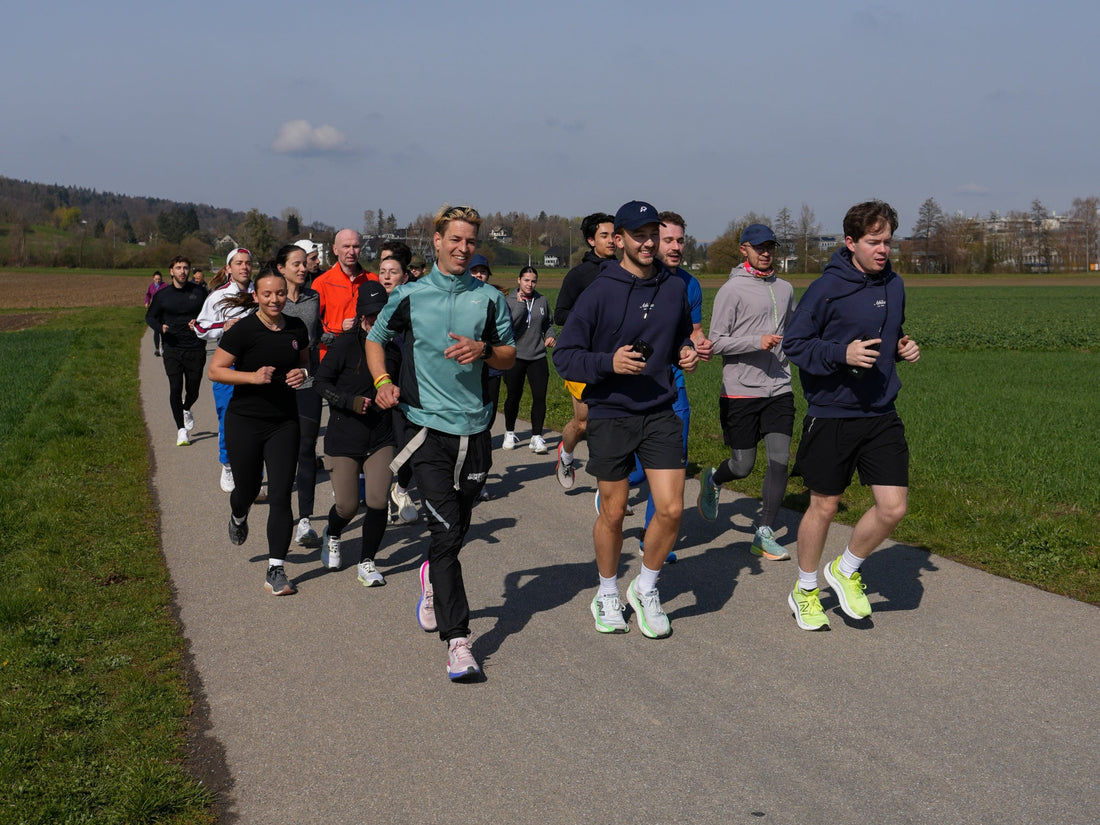
Those who run consistently in summer reap the rewards in autumn—every session counts.
What Heat Training Really Does to Your Body
When you run regularly in warm conditions, your body responds with a cascade of physiological adaptations. The most important one: blood plasma volume increases. This means your heart literally has more fluid to pump, transports oxygen to the muscles more efficiently, and works less hard in the process. According to an extensive meta-analysis in the journal Frontiers in Physiology, targeted heat training leads to measurable improvements in aerobic capacity, a lower heart rate at the same workload, and better thermoregulation through an increased sweat rate and earlier onset of sweating. The surprising part: these adaptations help you not only in the heat.
Acclimatization requires two things: time and consistency. Seven to 14 days of daily sessions in warm conditions are enough to initiate the key adaptations. Fewer than seven days has little effect, while more than 14 days brings little additional benefit. After that, the gains begin to fade—after three weeks without a heat stimulus, around 75% of the adaptations are lost.
Your Body During 14 Days of Heat Training
What happens physiologically—and when you feel the changes
Days 1–3
Shock phase – everything feels harder
Heart rate rises significantly and performance noticeably drops. Your body activates its stress response. Consciously reduce your pace and distance now—this isn’t a step backward; it’s the plan.
Days 4–7
Adaptation phase – heart rate begins to drop
Plasma volume increases, sweat rate rises, and sweating begins earlier. Initial improvements are measurable: heart rate at the same pace drops slightly.
Days 8–14
Consolidation phase – you become noticeably stronger
Full cardiovascular adaptation. Heart rate and perceived exertion drop to normal-condition levels. Performance gains are also visible in cooler temperatures.
From day 21 without a heat stimulus
Decay – the gains disappear
Around 75% of the adaptations are lost after three weeks without heat training. Maintenance sessions (1–2 times per week in the heat) significantly extend the effects.
7–14
Days to full adaptation
≥ 60 min.
Recommended daily heat exposure
75%
Adaptations lost after 3 weeks
Based on: Frontiers in Physiology (PMC6543994) & American Physiological Society Summit, April 2026.
How to Train Safely and Smartly in the Heat
Heat training isn’t a free pass to stubbornly push through at your normal intensity. It requires a plan—and respect for what heat does to your body:
- Use heart rate instead of pace as your benchmark: Your heart works harder in the heat by default. Train by heart rate, not target pace. Expect 10–15 beats more than usual during the first 3–5 days—that’s normal, not a sign of weakness.
- Start with moderate heat (22–28°C): Conditions that are too hot (above 32°C) are dangerous for runners who aren’t acclimatized. Start with comfortable warmth and gradually build up the conditions. A midday run on your first hot day is not a good idea.
- Double your hydration—and actively plan for electrolytes: Heat training makes you lose significantly more sweat, along with sodium, potassium, and magnesium. Water alone isn’t enough. Plan for electrolytes proactively, not after the run when the damage has already been done.
- Cooling down after training speeds up adaptation: A cold shower or a short ice bath after your session lowers core temperature more quickly and allows faster recovery—without undermining heat adaptation.

Those who dose their intensity intelligently will reach their goals faster in autumn.
The Most Common Mistake – Pace Over Adaptation
The biggest mistake in summer training is trying to run the same paces as you do at 15 degrees. Anyone who does this systematically trains into overload—with a rising risk of injury and declining training quality. The Consensus Recommendations on Training and Competing in the Heat (British Journal of Sports Medicine) explicitly recommend reducing intensity by 20–30% during the first heat sessions and gradually returning to normal loads only after 7–10 days. Summer isn’t the time for training PRs—it’s the time to prepare your body for a new level.
A second mistake is treating heat training as an isolated measure, separate from the rest of your training. Heat acclimatization only works if you also get enough sleep, eat well, and distribute your overall training load intelligently. Anyone who combines a calorie deficit with heat training risks more than they gain.
Put Your Heat Training to the Test
You don’t have to wait until autumn to test your summer training. The Hasli Night Run on May 29, 2026, is already sold out as a scored race in the ZKB Zürilauf Cup—if you have a starting place, it’s a perfect first test. For everyone else, the Zumiker Lauf on June 13, 2026, is the next realistic opportunity: 12.2 kilometers across fields and along the edge of the forest, with views of Lake Zurich. Anyone who has completed 10 to 14 days of consistent heat training by then will notice the difference.
Conclusion
Heat training isn’t an obligation you have to endure despite poor conditions—it’s an opportunity you can actively use. Anyone who now, in May and June, consistently trains for 10 to 14 days with adapted sessions in warm conditions will enter autumn with greater plasma volume, a lower resting heart rate, and endurance they would not have achieved without the summer. Dose your intensity intelligently, drink more than usual, actively plan for electrolytes, and trust the process.
Give it a try and tag us on Instagram at @athlix.performance—we’d love to see how you train this summer and share the best posts with the community.